Mobile App · 2026
Keipy invoicing redefined
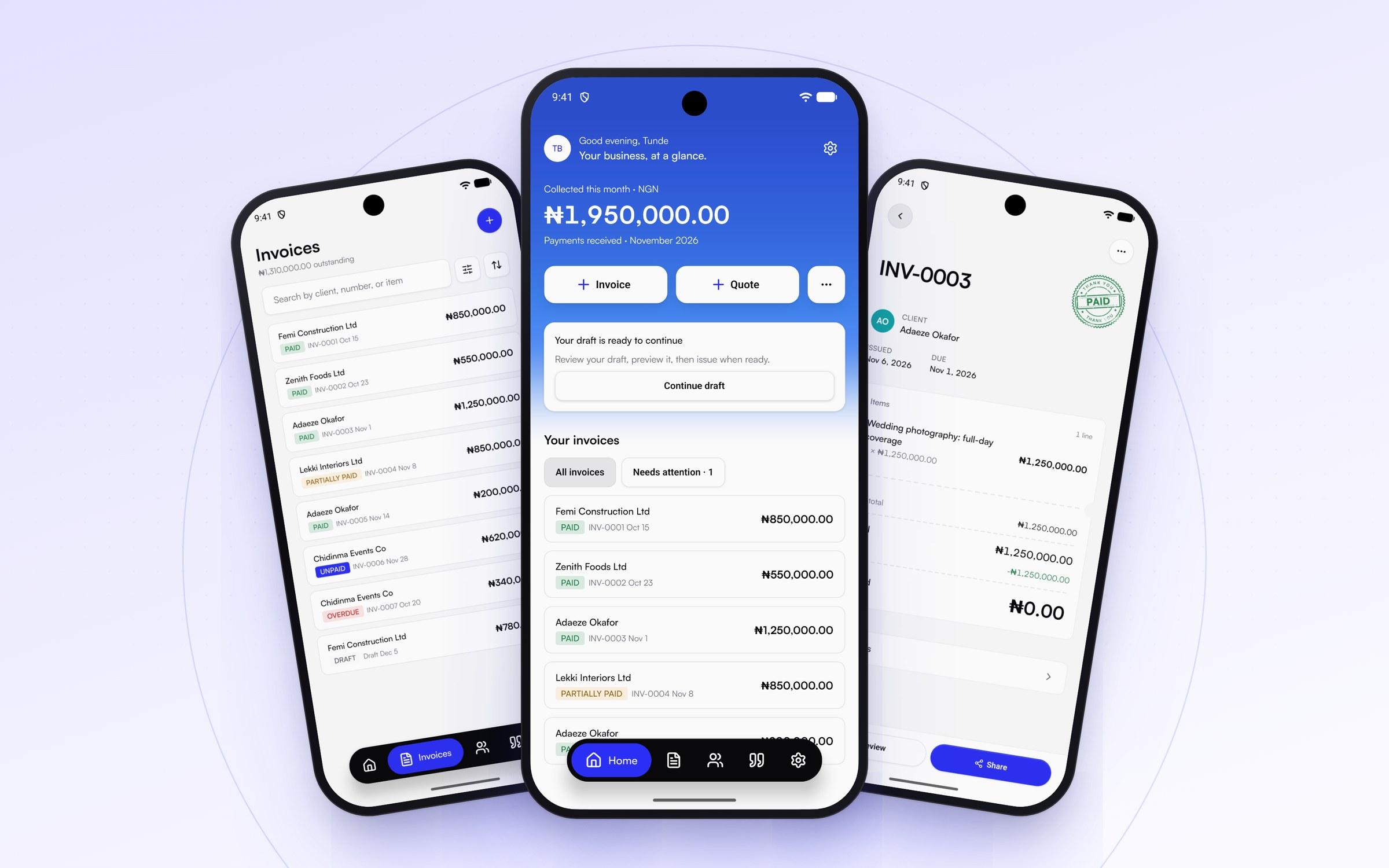
Keipy is a mobile invoicing and inventory app I built for my dad's business, to replace an expensive invoicing platform with something cheaper, better-designed, and built to keep working when the connection drops.
- React Native
- Expo
- TypeScript
- Supabase
- TanStack Query
- NativeWind
Problem
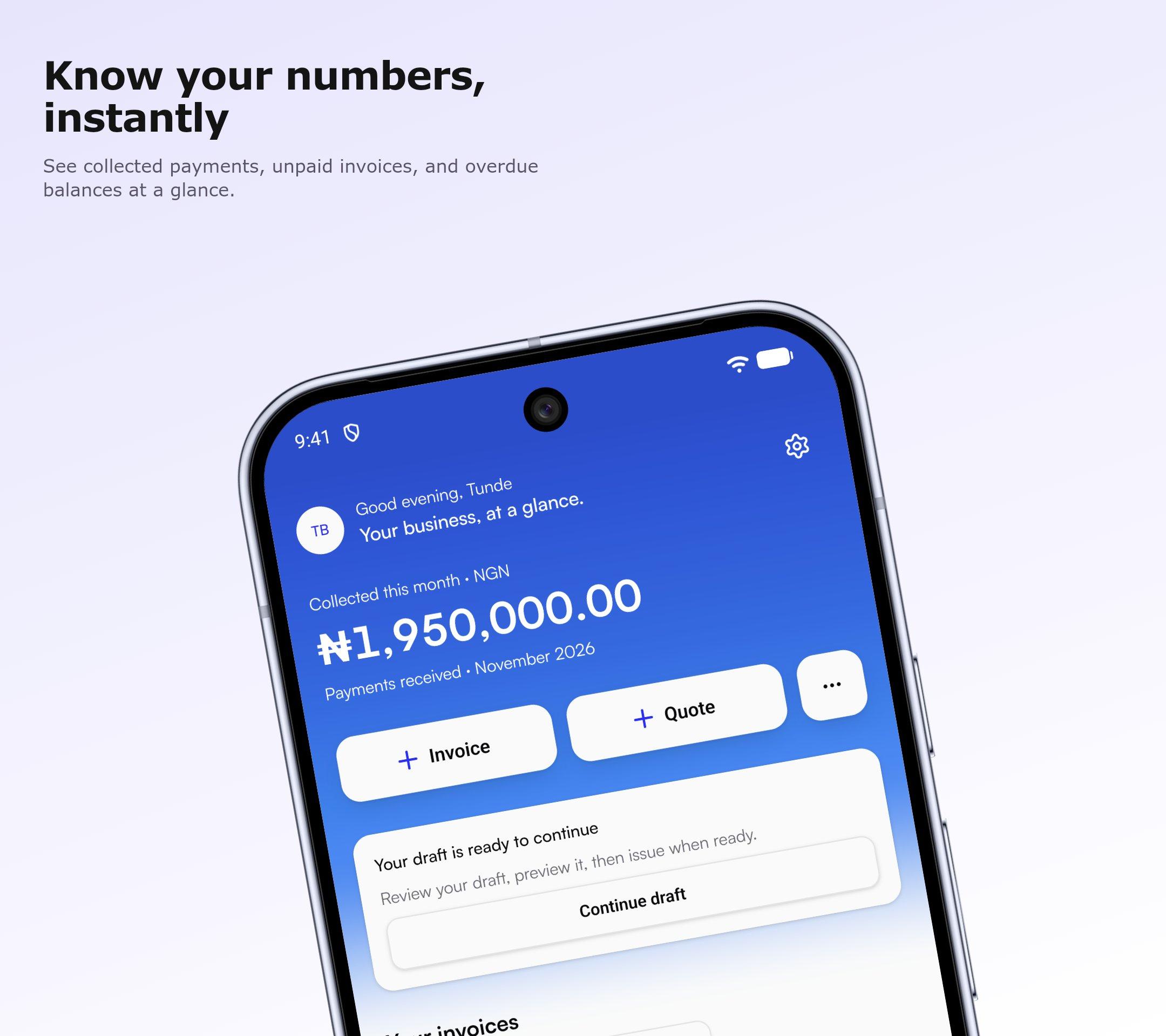
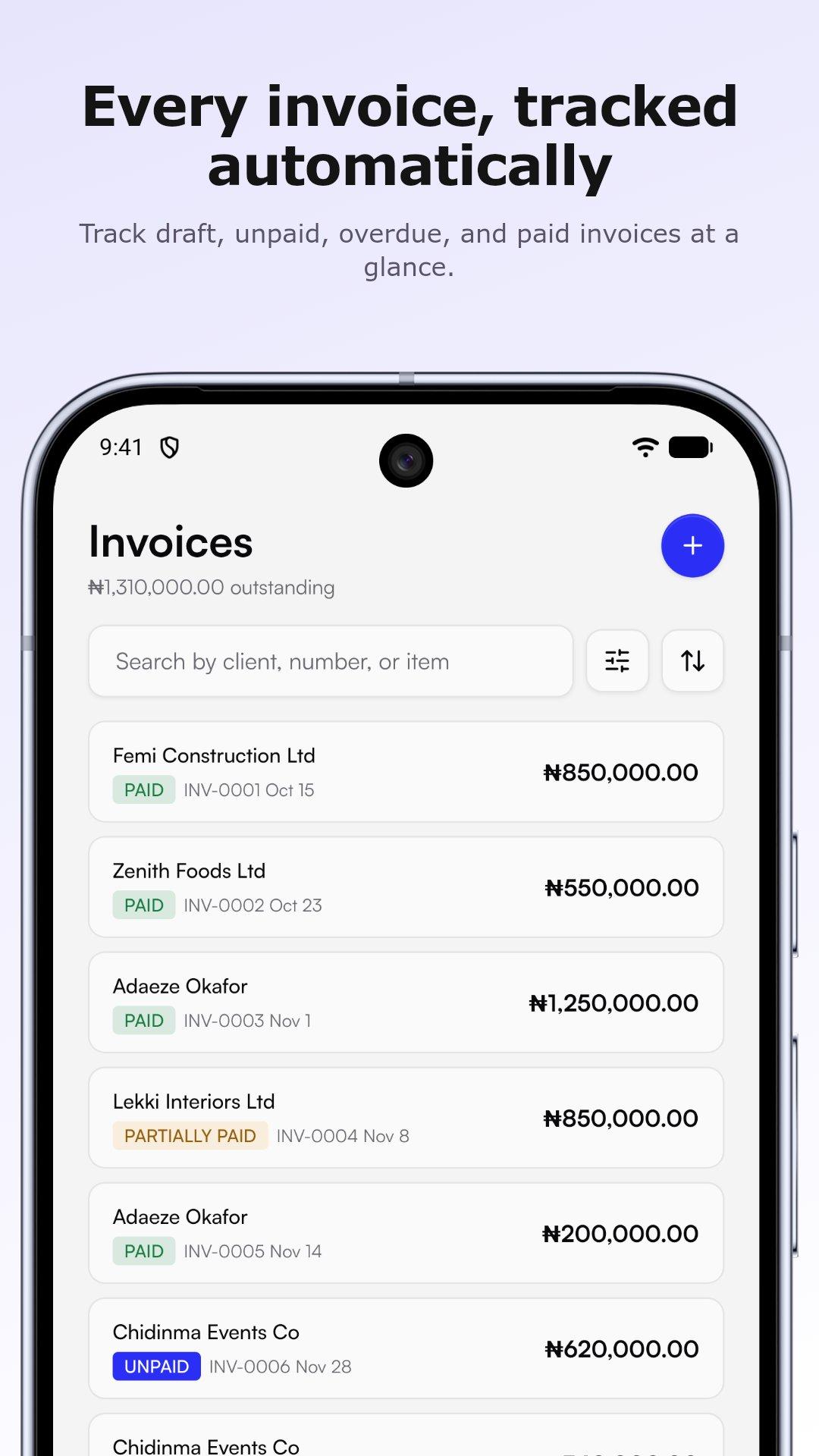
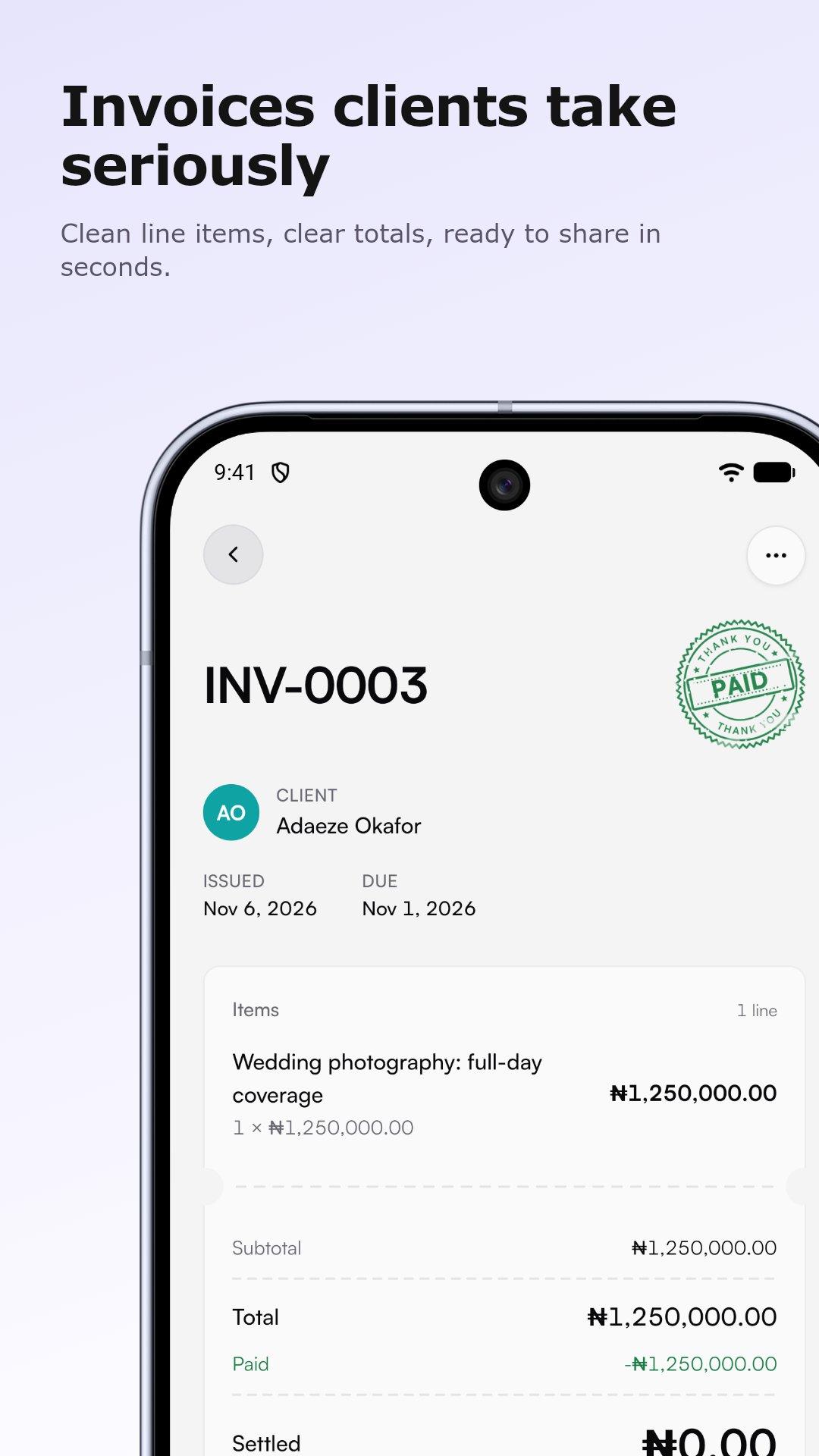
My dad's business was paying a premium subscription for an invoicing tool with a dated interface and thin inventory features. He already knew I could build software, so instead of paying for a tool built for someone else's workflow, I built one for his: quoting, invoicing, and stock tracking in a single flow, on a UI that feels like 2025 rather than 2015.
Challenge
This app has to work for a small business owner who doesn't always have a reliable connection. So invoicing, quoting, and payments can't just fail offline; they have to queue. I built an offline write-queue on top of the app's data layer: mutations made while offline pause, show as "syncing" in the UI, and replay automatically once the connection comes back, surviving even a full app restart in between.
Architecture
React Native through Expo, with Supabase as the entire backend (Postgres, auth, and file storage), so I didn't have to build and host a separate API just to ship the product. TanStack Query does double duty as both the server-state cache and the offline mutation queue, backed by local storage for persistence and a network-status listener that knows the moment connectivity returns. Invoices export as real PDFs, generated from an HTML template and shared straight from the device.
Decisions
- Built the offline queue on the data-fetching layer already in the app (TanStack Query) instead of adding a separate local database: one less moving part, one less thing to keep in sync.
- Tied inventory to invoicing directly: issuing an invoice decrements stock on the server and fires a low-stock warning in the same action, instead of treating stock levels as a separate screen someone has to remember to check.
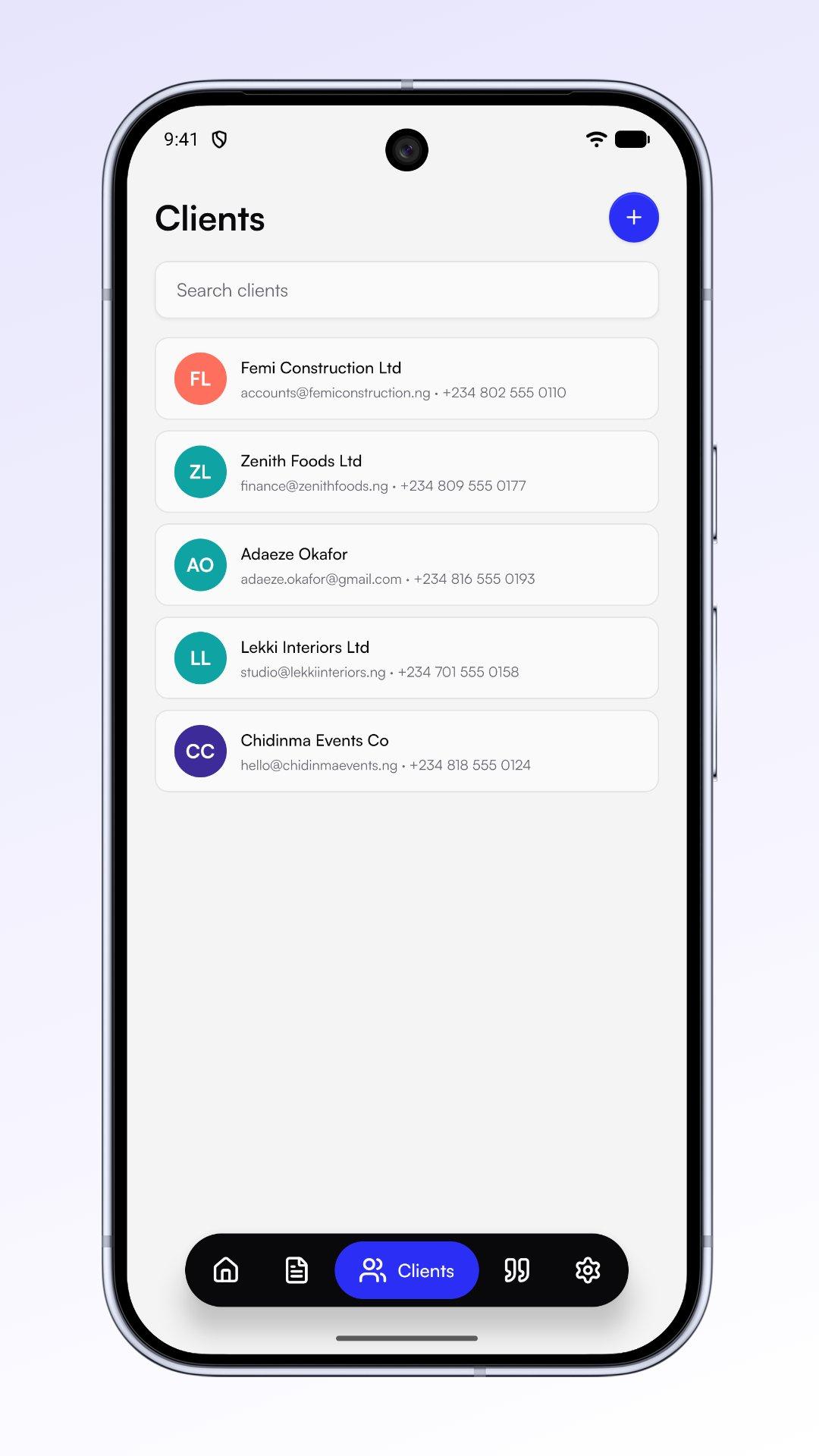
- Used the phone's own contacts via expo-contacts for adding clients, so entering a customer doesn't mean retyping a number that's already saved.
- Chose Supabase over a custom backend specifically so the project's engineering time went into the actual product, not into hosting and maintaining an API.
What went wrong
The offline queue works end to end, but I know of one real edge case that isn't fully handled yet: converting a quote into an invoice while offline involves a read followed by a write, and that sequence isn't as airtight offline as the simpler create/update paths are. It's documented, not hidden, and it's the next thing to close out.
Lessons
For a tool built for someone who might not have a great connection, offline can't be a feature added later; it has to be part of the data layer from the first design decision, or it never quite fits right. Tying inventory and invoicing into one action instead of two separate screens also confirmed something I keep coming back to: the best interface decisions usually come from watching how someone actually works, not from how the data happens to be modeled.